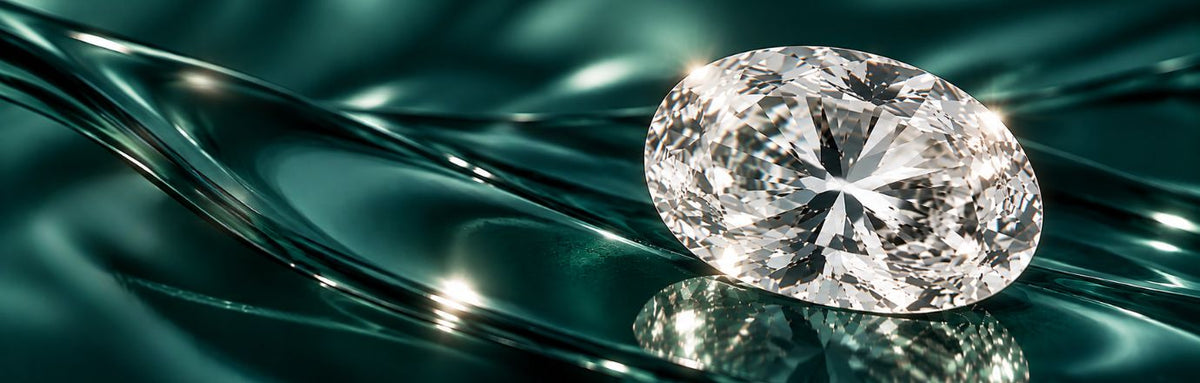


Lab-Grown VS Natural
More alike than different.
Lab-grown and natural diamonds share the same chemical, physical and optical properties. The fundamental differences come down to just three things:
-

RARITY
Produced in Quantity / Naturally Rare
-

ORIGIN
Lab Created / Earth Created
-

PRICE
More Affordable / Higher Priced


FAQ
Are lab-grown diamonds real diamonds?
Are lab-grown diamonds real diamonds?
Yes. Lab-grown diamonds are real diamonds with the same chemical, physical, and optical properties as natural diamonds. The main difference is their origin: they are created in a laboratory rather than formed naturally in the Earth.
What is a lab-grown diamond?
What is a lab-grown diamond?
A lab-grown diamond is a diamond created in a controlled laboratory environment using advanced technology that reproduces the conditions in which natural diamonds form. The result is a real diamond, made of crystallized carbon, just like a natural diamond.
What is the difference between lab-grown and natural diamonds?
What is the difference between lab-grown and natural diamonds?
Lab-grown and natural diamonds share the same essential chemical, physical, and optical properties. Their main differences are origin, rarity, and price. Lab-grown diamonds are created in laboratories and can be produced in quantity, while natural diamonds formed deep within the Earth over billions of years and are naturally rare. This difference in rarity is also one of the reasons for their significant price difference.
Why are lab-grown diamonds less expensive?
Why are lab-grown diamonds less expensive?
Lab-grown diamonds can be produced in quantity and do not have the same natural scarcity as diamonds formed in the Earth. Their production and supply are therefore very different, resulting in significantly lower prices and allowing buyers to choose a larger diamond or higher specifications for the same budget.
Are lab-grown diamonds certified?
Are lab-grown diamonds certified?
Yes. Lab-grown diamonds can be graded and certified by recognized gemological laboratories such as IGI. Like natural diamonds, they are evaluated according to characteristics such as carat weight, color, clarity, and cut. The certificate also clearly identifies the diamond as laboratory-grown.
Do lab-grown diamonds last as long as natural diamonds?
Do lab-grown diamonds last as long as natural diamonds?
Yes. Lab-grown diamonds have the same hardness and durability as natural diamonds. They score 10 on the Mohs scale of hardness and, with normal care, can last a lifetime and beyond.
How are lab-grown diamonds created?
How are lab-grown diamonds created?
Lab-grown diamonds are primarily created using two technologies: HPHT (High Pressure High Temperature) and CVD (Chemical Vapor Deposition). Both methods create the conditions needed for carbon atoms to form a diamond crystal. The process takes weeks rather than the geological timescales required for natural diamonds.
Should I choose a lab-grown or a natural diamond?
Should I choose a lab-grown or a natural diamond?
It depends on what matters most to you. A lab-grown diamond can offer more size or higher specifications for your budget, while a natural diamond offers natural origin and rarity. Both are real diamonds with the same essential physical and optical properties. The right choice is simply the one that best matches your priorities.